
Legendary PUNK Magazine founder John Holmstrom talks to ROX-TV about his career, big interviews, and his world famous PUNK Magazine
Thank you for talking with ROX-TV, I was thrilled when you said you’d like to talk and take a few questions. I appreciate your time today and everything that you’ve done with PUNK Magazine over the years. The hard part about reflecting back on such an important outlet like “PUNK” is trying to limit the questions, since every move that you guys made back then has turned into a vital part of the American Punk History. The move to create the publication in 1975, those fifteen hilarious issues, the living history that PUNK was able to capture of the artists and the scene, and how the legacy of the publication has endured.
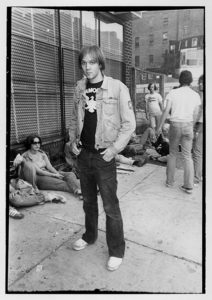
You interviewed Lou Reed in 1975 and featured him on the cover. “The Rock-n-Roll Vegetable” is, in my opinion, one of the most interesting Lou Reed interviews I’ve ever read (and hilarious). You caught him at a crazy time in his life, having just dropped the “Metal Machine Music” album, which still confuses people to the present day. He had been the textbook definition of underground with the Velvets a decade earlier, gave it all up, only to come back and hit commercial success with Bowie on Transformer, and the rehashing of Velvet tracks on “Rock-n-Roll Animal”. He seemed to despise things in only a way that Lou Reed could, with a dash of humor and wit sharp enough to cut a finger off. Did you know at the time, the minute he started talking, that you were getting some great material or did it all kind of go down in a blur? How important was that first Lou Reed interview to PUNK? (I love how he complains that you paid $8.50 to see Dylan, and then you were like, I once paid $8.50 to see you. Then Lou pulls a Lou and says “I should have charged $50.00, I’m pricing myself too low)
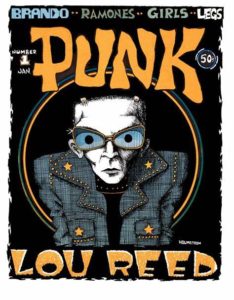
“From my first question, when Lou revealed himself as a comic book fan, I knew I was going to have a great interview. As he named his favorite cartoonists, I was visualizing how to draw the comic strip. It just got even better as we went on. Lou gave me a great interview and allowed me to hang around for hours even though I didn’t have a magazine yet (and after talking with the Ramones a few hours before, it was the first interview I ever did).
I was and have always been a fan of his music, so even though I wasn’t able to prepare myself I knew who I was dealing with and enjoyed Lou being “Lou Reed.” Once PUNK #1 was put together I knew it would have an impact on the rock music scene, but of course had no idea that we’d spark an international movement”.
“Death to disco shit! Long live the Rock! Kill yourself, jump off a fuckin’ cliff. Drive nails into your head. Become a robot and join the staff at Disneyland. OD. Anything. Just don’t listen to disco shit. I’ve seen that canned crap take real live people and turn them into dogs! And vice versa. The epitome of all that’s wrong with western civilization is disco. Eddjicate yourself. Get into it. Read PUNK. (excerpt from the editorial page) I also believe that disco sucks, but it must have taken on even more urgency at that time, because the shit was polluting the airwaves of America in real time. I have to applaud your application of your beliefs and I must say, it sounds like it could have been written in the 1990’s, and in that respect, was a bold, funny, and visionary thing to do back then. I know why you felt that way, but for kids out there today, who may have never even heard of disco, can you explain why it was so offensive to you as a fan of music and how you channeled those feelings into your publication back in 1976? Maybe give us a sense of America and what disco was doing people?
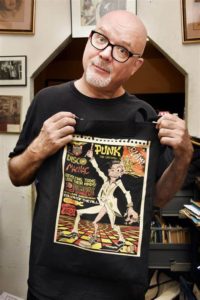
“Well, the anti-disco editorial was meant to be humorous and a bit of fun. I never hated disco music, I even liked a few songs, but it seemed mindless compared with the amazing rock music I had grown up with. To be honest, I was pissed off with the entire culture at the time. I hated prog-rock even more than disco, despised the ridiculous clothing people wore in the early 1970s, disliked the drug culture, and of course, the political situation. Even today, beyond punk rock, there’s not a whole lot that I like”.
The Patti Smith Graffiti contest. So, you were up for thirty hours working on the third installment for PUNK, when the printer called you up to inform you about a blank page in the back. You grabbed a promo pic of Patti hanging on the wall, had Legs write “graffiti contest” and problem solved. The contest actually got a good response from readers. Was this a case of “fuck it I’m tired” or last-minute genius? Once the contest received positive feedback, did it pave the way for more experimental approaches to filling content in future publications?
“I wasn’t tired at that point, in fact we went out drinking after the issue finally wrapped. I was wired from too much coffee, adrenaline and the pressure of making the deadline. We had delivered the magazine to the printing company, located a few blocks away, about an hour earlier, so when they phoned the office and told me that there was a missing page, I just wanted to get it over with.
I was thinking: “How the heck do I fill up an entire page with something as fast as possible?” I looked around the room: The Patti Smith publicity photo was 8.5” X 11”, so it would fill up the empty space. All it needed was a caption or something. I always liked reader participation when creating content: Letters pages, the Top 99 page, unsolicited manuscripts, etc. So a graffiti contest was a natural since it was a punk artform, so it was a great way to create art. I think we delivered the finished page within an hour.
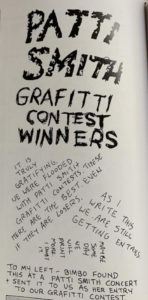
The contest was well-received by our readers for a lot of different reasons. Patti Smith had a definite love/hate relationship with CBGB people and rock fans. People either created a tribute to Patti or defaced her image. We had a really creative audience, and I was really amazed at the variety of Patti Smith photos we got in the mail. The winner was from Japan, and he has enjoyed a successful art career. There was even a shirt manufactured with his drawing as part of the Punk Magazine clothing deal in Japan several years ago”.
“The Harder they fall” on the Sex Pistols ill-fated tour of America is one of my favorites. I wasn’t born until 1980, but still managed to find my way back home to Punk Rock through the Velvets, Iggy, Ramones, and the CBGB universe. Like then million others, the Sex Pistols have a special place in my heart. Maybe it’s because of all the intense coverage from a generation earlier, or the fact that they exploded out of existence at the height of the debauchery and hype, or that Sid Vicious managed to finally die after the demise of Nancy. I don’t care if its cliche or not, I will always dig the Pistols. I have a million questions about the experience but will shorten the list down to fit the space and time we have. You were there so I’m really interested in what you think. Please say whatever come to mind when I say a name…
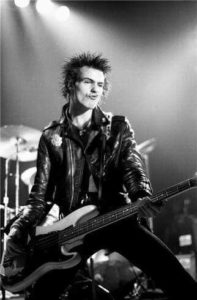
a. Sid Vicious:
“A really nice guy, but a sad example of how hard drugs can destroy a person. The most shocking thing about his drug use is that his mother might have introduced him to heroin, and there’s a theory that she deliberately gave him the overdose that killed him. How fucked up can a person get?
b. The obnoxious Johnny Rotten:
“Great performer, he really controlled the stage. That inflated ego of his was a big reason why. Sad to see he’s going through so many problems lately. My favorite moment from meeting him was after I gave him a pair of steer horns in Tulsa, Oklahoma. After he took them, he said: “Don’t forget to slag us off in that magazine of yours.” That comment convinced me that the anti-New York attitude they had was more pro wrestling kayfabe than real hatred. It’s very sad to me that the tour manager destroyed the steer horns after he found out that I gave them to Johnny. Apparently he thought that I stuffed them with drugs!
c. Malcolm’s idea of the actual venue selections for the tour:
It’s a rarely-mentioned part of Sex Pistols history that they weren’t able to play the earlier dates:
December 17, 1977: New York, NY (Saturday Night Live)
December 28, 1977: Homestead, PA (Leona Theatre)
December 31, 1977: Chicago, IL (Ivanhoe Theatre)
January 1, 1978: Cleveland, OH (The Agora)
January 3, 1978: Alexandria, VA (Alexandria Roller Rink)
“Just imagine if they had appeared on Saturday Night Live. That would have brought even more attention to the rest of the tour. That, and playing in the Midwest, the heart of rock ’n’ roll music back then, instead of the Deep South would have made a huge difference. I think missing those early dates cost the Pistols the opportunity to break big in the USA.
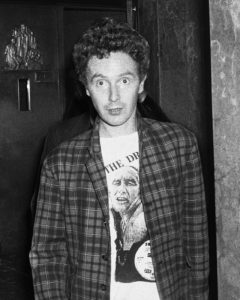
I enjoyed meeting him more than the band members, to be honest. Malcolm was a promotional genius, very eloquent and very honest. The tour was a fantastic experience for me and an amazing PR stunt. A US tour where they played CBGB and other obvious locations would have been so boring.
Intelligence agencies were definitely out to stop punk rock, they were everywhere back then. I believe this had a big influence on the ultimate failure of the tour and the band’s breakup. When the deep state gets involved in music and art it always ends badly. In the late 1960s and early 1970s the FBI’s COINTELPRO operation went after the hippie underground movement: just look at how they harassed John Lennon, the Black Panthers, the underground newspapers, etc. I’m sure that when they listened to the Pistols’ “Anarchy in the U.K” they thought they had to stop a dangerous, revolutionary movement”.
The AC/DC interview with Bon Scott and Angus Young was pretty interesting. Obviously, we all know how it turned out for them after they switched gears somewhat, Bon died, and the band became a mega rock and roll staple for a large cross section of people. I enjoyed “High Voltage” but didn’t take the entire journey with them. I felt like the magic got weird when Bon died, but it had all gone done before I was in kindergarten, so I guess it didn’t really matter. In the interview, they seem to be trying too hard to have outrageous comments and answers. Do you think that was the angle they were going for, to appear more “punk” than perhaps they knew how to be? It just sounds like their answers were a bit cheesy in hindsight, like really? (Even if they were drunk, it seems like they could have come up with some better shit than that)
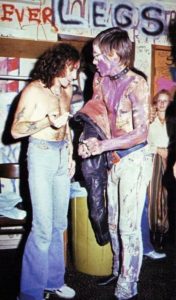
“Angus and Bon were worn out by the time we talked with them. It was one of those situations where the record company lined up over a dozen 20-minute interviews with different media outlets in one day, and we talked with them late in the afternoon. There’s only so much a person can say after talking with so many people.
A few days earlier, I met Bon at CBGB after they played a surprise midnight gig (earlier in the evening they were third on the bill to The Dictators and The Michael Stanley Band at the Academy of Music). Although we talked for a while and got along great, he didn’t remember me at all. I should have brought a tape recorder with me to CBGB!
Can you briefly talk about why there is no number nine, thirteen, and why eighteen became the straw that finally broke the camel’s back?
Can’t be brief here, sorry.
“PUNK #9 was completed and sent to the printer. We even checked the final proofs, so it was ready to go. I left New York to go on a family trip, and when I returned was told that the printer disappeared into thin air before it could be printed. We always hoped that we could somehow rescue it, so we numbered the next issue as #10. We were never able to track it down (a crime since it was one of our best issues and packed with advertising).
PUNK #13 was more than halfway done—The back cover drawing by Steve Taylor on the back cover of PUNK #14 was going to be the front cover of PUNK #13. When I was suddenly called to go on the Sex Pistols tour, we had to skip PUNK #13 (although most of PUNK #13 contents appeared in later issues). Since #13 is an unlucky number and we had our fill of bad luck, I skipped it.
With PUNK #18, once again we completed the issue and sent it to the printer. The owner of the printing company decided to make a rare visit to the plant, took one look at PUNK, and pulled it off the press announcing that his company would never print such trash (even though we had already printed four issues there).
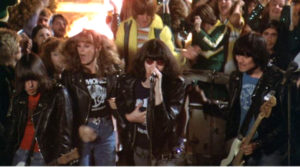
It was a devastating event. We couldn’t afford to hire a new printer (thousands of dollars), and the cover story (the Ramones in “Rock ’N’ Roll High School”) would be old news by the time we could find one. A string of tragedies (several deaths, drug problems, etc.) took place, and to top it off world events went crazy: the inflation rate (it rose from 5.7% to 13.5% during Jimmy Carter’s presidency), the Iranian hostage crisis, a paper shortage (that caused prices to double and triple printing costs). Music industry “professionals” were announcing “Punk is dead!” (even though it was just beginning). It all created a situation that made it impossible for us to stay in business”.
As much as I’d like to ask a thousand other questions, I know that you’re a busy guy and I appreciate you taking the time to talk to the readers at the ROX-TV website. It’s been an honor and a privilege to share these last six questions with you. It’s hard not to get star struck around a guy that was involved with the scene and doing shit when it truly mattered the most. History has proven you guys had a great eye for the talent and your instincts were dead on, even if it was a few years ahead of your time. For me personally, to talk with someone who dealt with the greats firsthand is a thrill. From Iggy, Lou, The Ramones, Sex Pistols, AC/DC, Patti Smith, Blondie, and The Clash….just to name a few. Your historical references are unmatched. Maybe the next time (In my dreams) we can talk about High Times, Spin, and your illustrations for the Ramones album’s “Rocket to Russia” and “Road to ruin”. Not to mention that brilliant “Top 99” list and Iggy. Thanks again for the opportunity today.
Mike Shepard
ROX-TV Head Writer
shepard2909@hotmail.com
kidvicious810 on IG
Check out these other great articles only on ROX-TV
https://rox-tv.com/2021/03/25/rox-tv-revisits-mad-season-and-the-1995-release-of-above/