
ROX-TV examines life in the “underground” across the globe in Turkey. The scene, music, tango and personal stories are discussed.
Welcome back to ROX-TV. Originally when I started writing for the website, I wanted to speak to people from the underground music scene from around the country. Eventually though, I realized that the “underground” isn’t just singular to America. The definition may change slightly from one region to the next, but one thing is clear and that is the “underground” is alive and well. What does it mean to be part of that “niche”? Well, I suppose the underground is a safe place for anyone who finds themselves outside of the mainstream or the accepted practices of his or her country (for whatever reason). The human spirit, at least in my view, has a tendency to resist control and thought policing. This never ending age old battle against what the system wants us to do, versus what individuals want to do, is nothing new. People trying to think for others has been going on as long as someone has been dominating someone else. Where there are rulers, there will always will some sort of “resistance”, and it will most likely always be in different forms and expressions.
Tonight I’m speaking with my friend from Turkey and her name is Zeynep. We started conversing on Instagram and became friends, when I joined the social media platform several months earlier. I was fascinated by her pictures and posts, and over time, the comments on pics, eventually led to an international friendship and an understanding about each of our “undergrounds”. (Author’s note: Zeynep often refers to the “underground” by “U”. So if you see it, that’s what is being discussed)
Can you introduce yourself to the ROX-TV readers tonight and tell them where you are from?
Hi Mike. I would like to start with a thank you for having the interest in whatever I got to say; gives a good vibe which I could definitely use during this pandemic epoch that puts the whole world to its trump. I’m a some forty year old gal; a Turkish citizen who lives in the biggest city of the country, namely Istanbul (former Constantinople). I am “officially” a sociologist who once tried her path through it both in Paris and here in Turkey yet ended up doing translations, of whether it be an academic work, children’s book or subtitles for movies, after a time period of working within various NGO’s. Yet I’m fed up with that as well for a while; I was planning on passing a year inNew York, where I had already been long, very long time ago, then heading to my “route 66” adventure which would hopefully end up in Latin America, for I have a killer passion namely tango; but it all faded away due to the pandemic shit. Lately I’m just stuck home watching, reading, and trying to find out what to do with my life..
Obviously, I’m a big fan of the arts, which must include dancing. A magical form of expression. I understand that you’re a Tango Dancer. Can you talk about that a little bit and explain why it’s so near and dear to your heart?
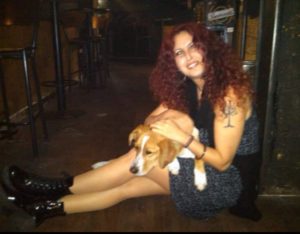
Yes, I’m a big fan of art in divers genres; for apart from cinema, music, dance, and literature I consider myself as a Disconnectus Erectus. [This so – called Latin originated word which stands for “a clumsy and easily frightened animal. Some can even be the size of a human being. In fact, at first glance, they even look like humans. The grip of his claws is weak. He is incapable of climbing hills and comes down a slope by sliding (frequently falling as he does so). He has almost no hair on his body; he has large eyes but weak sight, which is why he cannot see danger from a distance” is also the name of the controversial cult novel written by Turkish author Oğuz Atay, published debut 1970. (for the enthusiasts, the entire book is translated by Olric Press. On this occasion a huge “chapeau”* to the translator Sevin Seydi to whom the book is also dedicated to. * We the “francophones” use the term chapeau, literally also meaning hat in French, with a metaphorical extension to express respect to a personality encountered] I desperately rolled over this book during my M.A years at Paris which took some deadly five years that made me end up in a lunatic asylum.
Let’s move on to tango. I had never danced before in my life until I started dancing tango some eight years ago. Then one day I simply followed my intuition! I knew tango could heal my soul at least a bit since the first day.
Though regarding popular culture tango is widely judged as as extremely sexual and inappropriate for public display (both circa end of 19th century, to some extent, whilst originated in lower-class districts of Buenos Aires and Montevideo majorly at brothels and up until now) this is mainly a cliché. By the beginning of the 20th century when tango began to spread internationally, ballroom tango and “showcase tango” became distinct. The popular imagery nourished by cinema industry, mainstream if you wish, as well nourishes this common perception that I mentioned above as a cliché. Yet the complex footwork augmented with gymnastic lifts, kicks, and drops accompanied by flamboyant vesting is subject to stage purposes.
However the feet and the body travel off ground along with the soul which is what captures me in dancing tango. As being a passionate dancer yet not a professional one, I’m intrigued by tango music, improvisation opportunity, the drama within it and the above words said, I have to admit the sensual content that is associated. (While I was his assistant, my first tango master once said “no matter how perfect one’s technique could get, if you don’t have enough drama in your life, you can never be a real tango dancer”; I agree.)
Since “it takes two to tango”, it’s led and followed. Tango is typically performed between a man (tanguero) and a woman (tanguera). Though in the early 1900s, there were often more male dancers than female dancers, so the dance was performed generally between two men. Gender roles play a big part in the mechanics of tango. But in recent times this is being challenged due to woman not wanting to be dependent on the male; and this is where “queer tango” enters the stage. A surprising challenge for the LGBTI+ movement.
Last but not least, when we talk about tango in terms of music as well as the dance, we talk about tango, waltz and milonga; the last being fast tango. Yet a newer style called tango nuevo meaning “new tango” has been popularized by 1980’s by a younger generation. Astor Piazzolla, composer and virtuoso of the bandoneón (“tango accordion”) played a major role in the innovation of traditional tango music by introducing this new style. This style is often associated with those who enjoy dancing to jazz and techno-tinged, electronic and alternative music in addition to traditional tango compositions. “Alternative tango” could be explained as non-tango music employed for use in tango-inspired dance. While putting a period I would strongly recommend the ROX –TV listeners to give a try to the genre. And for my favorite dancers: Michael Nadtochi, Eleonora Kalganova, Paula Duarte, Sebastian Arce.
I understand that the political climate in your country features a dictatorship. How has this affected the arts in your country? How are the artists, dancers, and musicians dealing with creation and enjoying their crafts under such a political situation?
The country left even a false “pro-democracy” attitude aside long time ago. Yet in the meantime we still pretend to be a part of the European family, E.U if you wish. Well, of course it doesn’t work since “it takes two to tango”!
Inside, “system of control” as you put it and the bow down keeps abreast of resistance. The catchword, battle cry if you wish, “resist” became the motto especially during the “Park Gezi Incidents” that started in Istanbul yet spread out to whole country in 2013. Disproportionate violence exercised by police due to rigid orders of the government, both hurt people (8 civilians, 2 officials are killed and thousands got injured, some permanently) and fired the resistance in exchange. Since then pro-governments and contre-governments are fighting against in daily basis since everyday something worse happens in this country in terms of losing the already weak heritage of democracy.
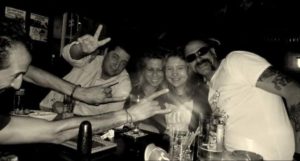
As for the artistic scene, oppositional artists of every genre are tried to be silenced. For example, their concerts are constantly being banned. We have a festival tradition not only but especially at Istanbul during summer time. Alcohol has been banned during this open air festivals; if the festival itself haven’t been already banned! It became a clash between two “ways of living” as formulated here long time ago. Turkey is a country having a so-called 90 percent Muslim population. And because we are not only governed by but also dominated by an Islamic “quasi dictatorship”, secularism becomes and had became a veritable issue. (Yet I have to mention that this country experienced four coup d’etat up until now; the latest being a “postmodern” one. This is all to say that neither democracy nor secularism became an issue only because of the actual government.)
A bunch of singers, led by a rapper song a piece called “I can’t keep quiet” which found it’s echo fairly enough in the society and has some parallelism with “I can’t breathe” which originated in States yet spread worldwide. Another example of protest and solidarity as well took place via social media: singers quoted each others lyrics as chain tweets; aiming to attract the attention on censor reigning over the country. To sum it up, following Michel Foucault, I could say “wherever there is rulership, there is resistance as well.” This country won’t turn out to be a Middle East country, that’s for sure.
What does “The Underground” mean in your country? Can you talk about the scene and give us a feel for what is happening in the Underground?
Gee this is a hard one! So I’ll go through my personal path. In my humble opinion Underground (U) signifies a way of life that is mainly ruled by one’s own rules and choices rather than being ruled by “what should be”. Which also goes along with what I call “being real” which again goes along with “real relationships” since “it takes two to tango”!. Putting it this way, I assume it’s clear that I don’t generally accept what “should be done” and find the majority of the relationships, hence people, genuine.
I grew up in Ankara, the capital of Turkey. After spending my sophomore year in Wisconsin, the re-adaptation process was achy; by the time we were all trying to figure out “what we want to be” meaning getting ready for the college, I was introduced to booze and drugs; which also meant entering some U. world. By the time my intention to become a singer faded away I was frequenting a literal U. bar way below the ground. So rather than college building, my bloom years passed in that hole, accompanied by some others.
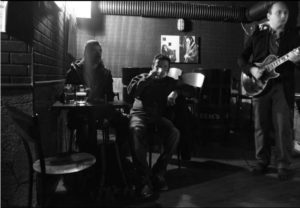
After disastrous Paris years, I moved to Istanbul and “street years” started for me. By the time the main rallying spot of the U. people were back streets of Taksim Square (where the above-mentioned Park Gezi is also situated). Boozing on streets was cheap and you knew who you could come across at which one of the street; some light – hearted years with a lot of chatting and listening to music.
Then came the epoch of indoors. There were few cult places to hang out. No name artists who took stage at these places by then mostly became celebrities later on. Debuting at U. stages and becoming leading actors of the musical scene yet insisting to keep their unique style yet again being part of the industry; this is where the rubber meets the road regarding U. Well, hard to answer in one go. Yet if you follow the “U. stays U.” logic to the terminal, which I find it hard to advocate, the loss would be huge. After all we speak to be heard; don’t we..
In passing, for the ones who are not familiar with yet would like to reflect upon the issue, I would like to remind the history of CBGB which was a New York City music club opened in 1973. Its full name of CBGB & OMFUG stands for “Country, Bluegrass, Blues and Other Music for Uplifting Gormandizers.
Meantime a specific U. culture was shaping on the other side of the sea (Istanbul straddles the Bosphorus strait and lies in both Europe and Asia); namely “Kadıköy sound.” Again both indoor cult places along with spots at certain streets were gaining ground. U. culture here was getting shaped round record stores, U. publishing houses, passageways that people gathered to get numb, to booze and exchange zines.
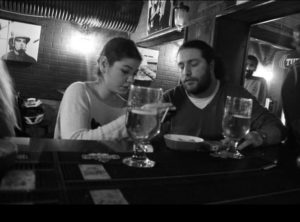
Time passed, inevitably. By the fast moving rock’n roll years are left behind, I calmed down pretty much to jazz. Things changed yet some has not. Being part of “Kadıköy U. scene” I still frequent “holes”. My latest one is Anarres, named after Ursula Le Guin’s book The Dispossessed. “Hole” here represents both literally U. places and A Room of One’S Own borrowing Virginia Woolf’s words. Not only the owner has become a homie long time ago but also a bunch of frequenters are as well friends, whom I call the “clan”. I once remember buying a lightbulb on my way to Anarres cuz the barman called me to get some for the existing ones went out and they haven’t a coin.
Rounding up the circle, genuine relations that time doesn’t wear out, trying to find out what to do with your life, always being experimental and daring in every aspects of life yet being insistent about your principles to the bitter end completes the U. as we take it in terms of music, cinema, literature etc.
I’m a die hard Lou Reed supporter and I believe that you are too. Can you talk about some of the artists in America that have inspired you over the years and what you think is important about them? (Burroughs, Morrison, Winehouse, whoever you want to talk about)
Hell yes I am. Yeah, there are a bunch of American artists that influenced my life; along with the American (U.) culture. To start with I should mention “The 27 Club”; incredible talents that inspired generations, troubled lives, and drug-fueled frenzy; to the expense of some characterization. To name some, Jim Morrison. I did the redaction of Wallace Fowlie’s book Rimbaud and Jim Morrison: The Rebel as Poet for the Turkish version published as Soul Mate. Jim Morrison & Arthur Rimbaud which is “a personal meditation on two unusual yet emblematic, cultural figures”. (By the way, the publishing house, Sub Press, whom the motto is “not for those who want to fly but for the ones that have already flew” is one of the veritable U. publishers of the country. Being a part of Kadıköy sound, beat literature is largely transferred to readers here thanks to them.)
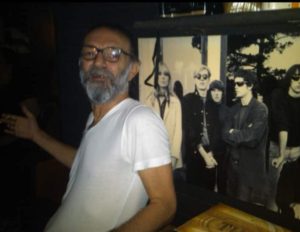
A few decades down the road, in a different era for music, Kurt Cobain has been a great influence in the alternative music scene and Jean-Michel Basquiat, who OD’d at age of 27.
And the latest recruit of the group Amy Winehouse, obviously; not only for her deep, distinctive vocals and unique style but also along with ongoing drug and alcohol abuse, self-harm, depression and eating disorder that I find too close to myself. As an icon of angst deepened by an immense fragility, I find a true-blue drama queen in her. Probably not a surprise for a borderline..
Sid Vicious and Jeff Buckley are also important figures that not I only appreciate the art but also the personalities. The Beat Generation should be mentioned as well. Not only their innovative style but also in terms of “on the road” vibes which I’m a follower to some extent. The list has to finish with jazz people of course. There are too many to mention yet sine qua non’s are: obviously Chet Baker and Miles Davis, Dizzy Gillespie, Trane, Ella Fitzgerald, Sarah Vaughan, Nina Simone, Abbey Lincoln, Wynton Marsalis, Keith Jarret.
Lastly, I can’t think of jazz without the Scandinavian jazz. (I have a special interest in Scandinavian litterature and cinema as well.) Again to mention some favorites: Jan Garbarek, Esbjorn Svenson, Tord Gustavsen, Bugge Wesseltoft, and Oystein Sevag.
Shout outs. I’m from the 90’s and I’ve always believed in the “shout outs” by artists. Who are you shouting out tonight? Anything or Anyone, list everyone you want.
At the expense of looking arrogant, to myself! To some of my doctors that healed my body and soul at some point or another. And to my lifelong pals that make life supportable. And a shout out to you homie. This was dope. I enjoy reading your articles and discovering artists on ROX –TV which nourishes me.
Well that’s about all the time we have right now. I’d like to thank my friend from Turkey…the fabulous Zeynep for her friendship, sharing her story, and talking with me tonight. I wish her the very best from my “underground” to hers. Sometimes the only thing that really separates humans from each other is distance. We are all unique and have value, and with that I will say goodbye for now. Please tune in again for more from America and around the globe, featuring news, music, reviews, and “undergrounds” worldwide. Peace.
Signing Off,
Mike Shepard
ROX-TV Head Writer
kidvicious810 on IG